
It answers. It doesn't work.
Open a chat, ask, get an answer. The question's handled, but the work still sits on your team. Nothing runs without you, and nothing compounds into an edge.
FRCP · ROI-driven AI systems
The easy wins are obvious. The ones that move your numbers sit a level deeper.
Focus on your mission.
From the shop floor to the boardroom, the companies pulling ahead aren't using better AI. They wired it into the work itself.
Quotes out in minutes. Exceptions caught overnight. Decisions made on today's numbers.
Your whole team has ChatGPT, Claude, or Copilot. So why hasn't any of it reached your bottom line? Four reasons:
Open a chat, ask, get an answer. The question's handled, but the work still sits on your team. Nothing runs without you, and nothing compounds into an edge.
A generic model knows the world and nothing about your business: your data, your processes, your customers. So it guesses, confidently and wrong, and your team keeps re-explaining what it should already know.
AI drafts the email and summarizes the call: the easy five percent. The part that actually costs you, the quote stuck for three days, the invoice exceptions, the handoffs between systems, stays manual. Nobody built the whole process. Systems that do already exist.
Every prompt sends a little more of your business into a tool you don't control, with no clear line on who sees it. The fix isn't to stop using AI. It's to own the stack: your data stays in your infrastructure, trains a system that's yours, and never leaves your governance.
The gap between the surface and the payoff is one thing: structure. That's what we build.
No twelve-month engagement that ends in a slide deck. You see a working system in weeks, not quarters, built around one number we pick together on day one.
After your first call, we go deep: a working session on your SOPs, KPIs, and processes to find exactly what's blocking your goal.
We break roles and tasks into workflows, map the architecture, tools, and cost around the one metric that defines success. You get a working concept in the first few days, and we make no production changes without your approval.
We build in rapid cycles. Within weeks you've got a working version live and doing real work, not a big reveal at the end.
A system that keeps improving itself: measuring, tuning, and sending your team clear feedback. It gets sharper the more it works, and it stays yours.
No hype, no science projects. We find where AI moves a real number in your operation, then build it: integrated, measured, and running in production.
AI agents take over the manual work running between your systems: the matching, chasing, re-keying, and re-entry that quietly burns payroll hours. In process-heavy roles that's easily a quarter of the workload, often half. The same team handles far more, and your best people get back to the work only they can do.
→ revenue grows, payroll doesn't
When quotes, follow-ups, and answers go out in minutes instead of days, you win the deals that go to whoever responds first, and your best people spend their time selling, not searching.
→ higher win rate, shorter sales cycle, nothing slipping through
When the system hits an exception or needs input it doesn't have, it doesn't guess or stall. It flags the right person, acts on the answer, and learns, so it asks less every week. The work keeps moving, and a human steps in only when it truly matters.
→ nothing fails silently, and it leans on your team less over time
Your systems already hold the answer. AI surfaces it in real time: what's about to break, where margin is leaking, which account needs attention now, before it costs you.
→ precise, real-time insight from data you're already paying to collect
Bringing in outside help for AI usually means a junior team, a system you can't see into, and your data on someone else's servers. We do it the opposite way, on purpose:
No account managers, no junior handoff. The person who scopes your project designs, builds, and integrates it, start to finish.
Other AI firms are a room of developers who know nothing but code. We start from your P&L: which process, which metric, and what moving it is worth. Then we build the system that moves it.
Most AI breaks for the same reasons: it makes things up, forgets what it was told, and answers from a world months out of date. We build around those limits from day one, so yours stays accurate, current, and reliable.
When privacy demands it, we run open-source models on your own servers, so nothing leaves. Otherwise we build for data residency, zero retention, and no training on your data, aligned with GDPR and the EU AI Act.

I'm Felipe Roscoe, founder of FRCP. I've been using AI since 2022, before it was a headline, and I run every engagement myself: the first call, the design, the build, the integration. No juniors, no handoffs. You get one person who knows your operation inside out and answers for the result.
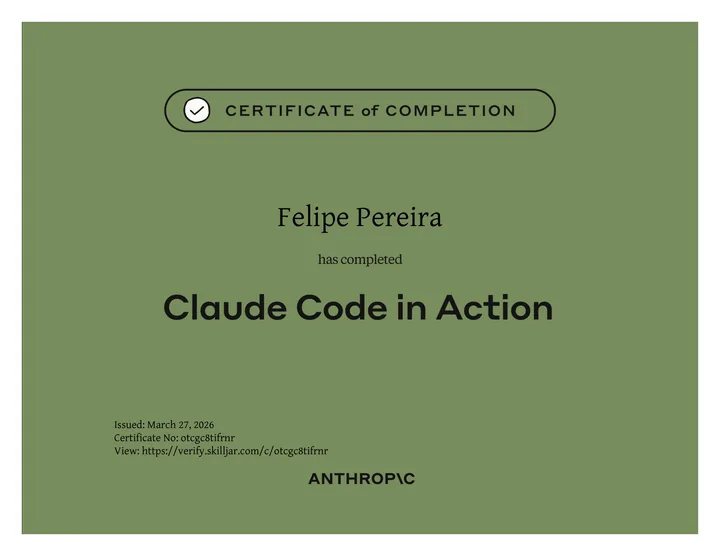
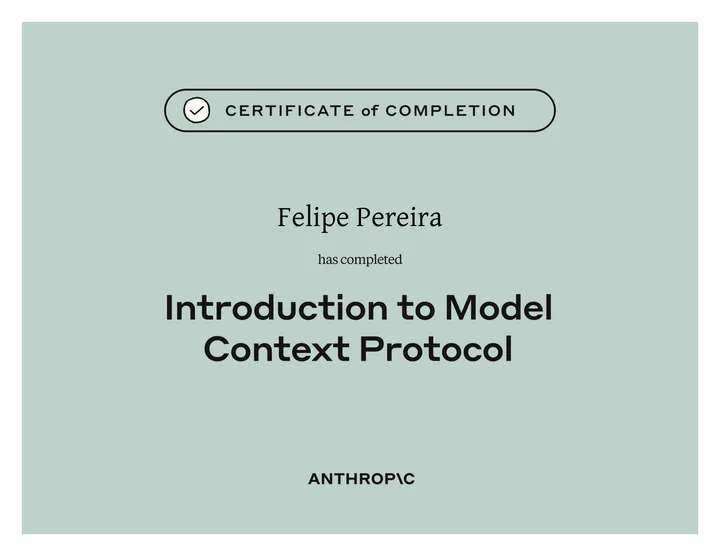
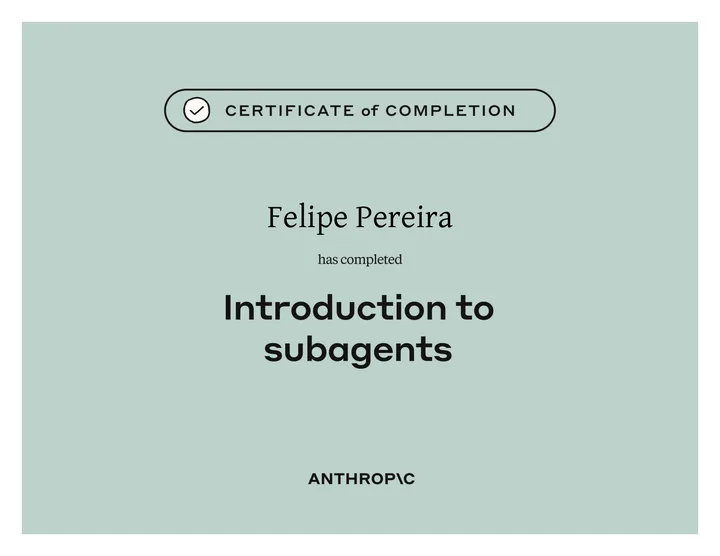
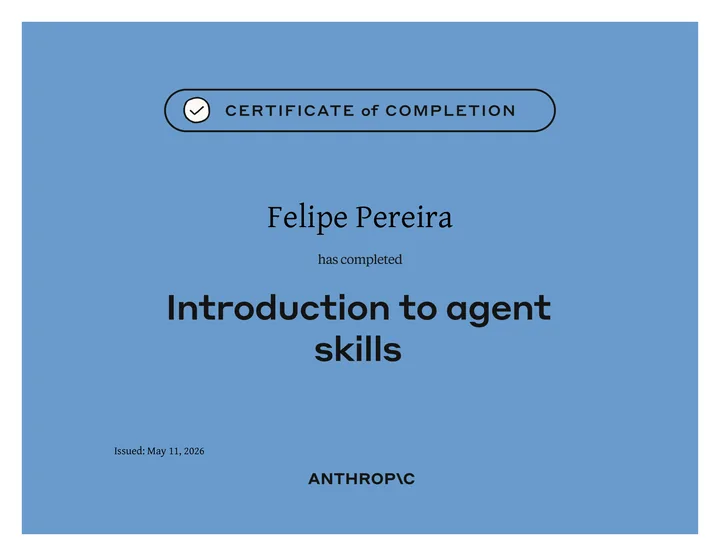
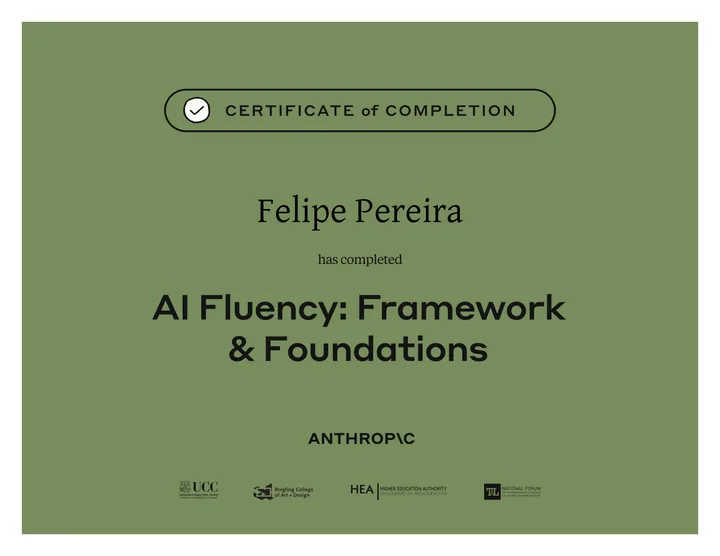
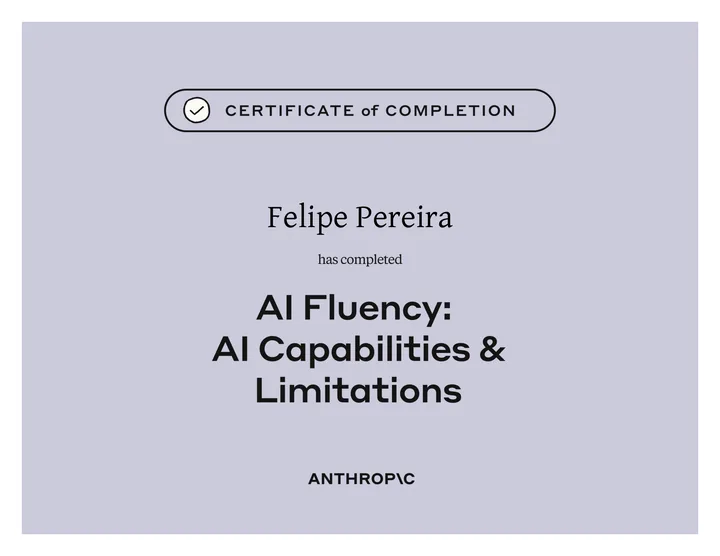
certified by Anthropic, click any to verify:
A working pilot, not a pitch deck. You see it run on your own process before you commit to the full build.
Tell us the one process that eats the most time or money. Within 24 hours you'll have times for a free 30-minute call, no pitch. You'll leave knowing the first process worth automating and roughly what it's costing you each month. And if AI isn't the answer, we'll say so.
prefer email? contact@frcp.com.br